• Skip to primary navigation
  • Skip to main content
  • Skip to footer

South Carolina Beaches

Visit The Amazing Carolina Coast


  • Home
  • Things To Do
  • About
  • Where To Stay
  • Articles
  • Areas & Hot Spots
  • Grand Strand
    • Litchfield Beach
    • Pawley’s Island
    • Murrells Inlet
    • Garden City
    • North Myrtle Beach
    • Myrtle Beach
  • Contact
  • About
  • Charleston Area
    • Edisto Beach
    • Folly Beach
    • Fripp Island
    • Isle Of Palms
    • Kiawah Island
    • Seabrook Island
    • Sullivan’s Island
  • Southern Coast
    • Hilton Head Island
    • Beaufort
  • Contact
    • Guest Posting Request

Articles

The Historic Tales Of Pirates Off The South Carolina Coast

Posted on: January 13, 2017

While images of Port Royal and the Spanish Main fill most people’s imagination when they hear the word pirate, the truth is, not all privateers were sailing around the Caribbean looking to capture gold bound for Cadiz. The British government imposed a huge tariff on goods coming in and out of the American Colonies that spurned a black market for cheaper goods that had been plundered from foreign vessels. At the time South Carolina was an impoverished colony that was only eager to trade with the pirates letting them move around town freely just as if they were in New Providence.

No city in the United States has a pirate history quite like that of Charlestown, South Carolina, and while places such as Key West and Savannah are often mentioned as pirate towns, neither can come close to matching Charlestown for its Historic connections to the age of piracy.

A long list of names wanted by the crown for piracy preyed upon shipping in and out of Charlestown and it was not until South Carolina became a major exporter of rice and the plantation owners petitioned the British to clamp down on the privateers that anything happened.

On September 5th, 1717 King George the 1st offered a clemency to all pirates in Nassau who were willing to give up their wicked ways and pledge allegiance to the crown, while also promising to settle them in the colonies if they promised to no longer take to sea.

Given little choice when threatened with the noose, all the pirates chose clemency, but it was not long before they went back to their old swashbuckling ways bored with accepting the life of a poor settler.

The most famous pirate to be associated with Charlestown is Edward Teach, better known as Blackbeard, who in 1718 showed up off the coast of South Carolina with an armada of ships intent on blockading the port of Charlestown.

Within the space of a week, he had plundered eight ships, bringing the town’s economy to a standstill without actually having to put up a fight.

Despite doing well from the captured ships, the real reason Blackbeard had blocked the port was to obtain a chest of medicine that contained mercury, the only thing at the time known to treat syphilis.

Having now gotten what he came for Blackbeard turned his fleet north heading for his now home port of Bath, North Carolina.

One member of the raid on Charlestown that did not fare as well, however, was Stede Bonnet, a former plantation owner in the Caribbean who took to piracy in search of adventure.

Not skilled in the art of navigation and warfare Bonnet was captured by the British after a five-hour battle in the Cape Fear River and brought back to Charlestown for trial.

Now tried and convicted to death by hanging, Bonnet was taken to the gallows at White Point where he and other pirates that followed were strung up until dead.

Charlestown was also the home of the most notorious female pirate Anne Bonny, the hot-headed daughter of an Irish plantation owner. Having run away with a sailor Anne took up company with John “Calico Jack” Rackham, captain of the pirate sloop Revenge.

When finally captured by the British, Anne and fellow female pirate Mary Read were the only crew members sober enough to put up a fight.

Paraded before the Governor of Jamaica all three were convicted of piracy and sent to the gallows although a partial clemency was granted to both women due to the fact they were pregnant, with the sentence later to be carried out after childbirth.

Records stated that Mary Read died in her cell, yet there is no mention of what became of Anne Bonny, with suggestions that her father paid the Governor a high ransom to spare his daughter and marry her off to a member of Jamaica’s high society.

Pirate history abounds in Charlestown, with many of the old taverns and places they acquainted open to the public, giving you the opportunity to learn much more about the Golden Age of Piracy and the role South Carolina played in its history.

Hero photo by Edgar Lee Espe

Filed Under: History

Plantation Houses Of South Carolina

Posted on: December 20, 2016

Following the Colonization of the Americas by European settlers, it was the moneyed elite that was either given the land to farm by the crown or used their own wealth to establish a foothold in the New World.

In the case of South Carolina just as in the Caribbean slaves were brought in to not only work the land, but as household servants to work in the large plantation houses that sprung up to oversee vast tracts of farmland.

While many of these large stately homes perished under the torch of Sherman’s Army, those that remain provide a unique glimpse into what life must have been like in Antebellum America.

Boone Hall Plantation – Mount Pleasant, SC

Founded in 1651 by an Englishman, Major John Boone, Boone Hall is renowned for its lovely gardens and an approach to the main houses the features 200-year old oak trees that are draped in Spanish moss. Once a thriving cotton plantation, today Boone Hall produces a variety of fruits and vegetables on its 760-acre estate.

Fort Hill – Clemson, SC

Home to the only Vice President of the United States to be born in South Carolina, John C. Calhoun, the 814 acre Fort Hill Plantation was bequeathed to Clemson University in 1888 with the understanding that the historic house and grounds never be changed. Clemson now operates the house as a museum providing daily public tours.

Hopsewee Plantation – Georgetown, SC

Now listed a National Historic Landmark in the heart of South Carolina’s Low country the Hopsewee Plantation was one of the colonies premier rice producers. Built in the early 18th century, some 40 years before the Revolutionary War, Hopsewee was the birthplace of Thomas Lynch, Jr. a signatory to the Declaration of Independence.

Millford Plantation – Pinewood, SC

Regarded by many as the finest example of Greek Revival residential architecture in the United States, Milford Plantation somehow managed to avoid being burnt to the ground following Potters Raid on the railways between Florence, Sumter and Camden. With an interior just as magnificent of its facade, Millford is open to the public the first Saturday of the month.

Middleton Place Plantation – Charleston, SC

Dating back to the 1730’s Middleton Place was a sprawling rice plantation, typical of the South Carolina Low Country. During the early 19th century landscaped gardens were all the rage, leading the Middleton’s to lay out a design that the Garden Club of America says is “the most important and most interesting garden in America”. The plantation like most great houses of South Carolina was burned during the Civil War, but now following a full restoration is a living museum open to the public.

(Pictured above)

Magnolia Plantation – Charleston, SC

Originally settled in 1676 by Thomas Drayton, a new arrival from Barbados, the Ashley River rice plantation flourished while changing hands between British and American troops during the Revolutionary War. Firmly on the side of the Americans, Drayton’s son’s fought for the Colonial Army before going on to become highly regarded statesmen after the war. In the early 19th century gardening, filled the spotlight and while many a great house copied the formal English style, John Drayton set out to create a garden making use of the land’s natural contours and water features. Credited with cultivating the first azaleas in America, the gardens survived the Civil War eventually taking over from agriculture to become the plantations main money maker before opening to the public in 1870. Today the house and gardens provide a unique look back into American horticulture and plantation life.

Hero photo by meunierd

Filed Under: Culture

Is Greenville The Best Place To Live In South Carolina?

Posted on: November 14, 2016

For a long time, it seemed as if Boulder, Colorado was the place where we should be all living. All the country’s major newspapers and travel and food magazines touted the Rocky Mountain haven as the most progressive town in the country.

There is, of course, no point arguing the fact that Boulder, thanks to the University of Colorado has a young, vibrant, feel to the place and with Eldora Mountain Ski Resort on your doorstep and Vail and Breckenridge just a short drive away it makes a great home for winter sports enthusiasts.

Meanwhile, Greenville, South Carolina has quietly been going about its business while not bragging about what a great town it is and why you should live there. Greenville preferred word of mouth to do the job, allowing the Blue Ridge Mountain Beauty to grow at its own leisurely pace.

Located in the upstate region of South Carolina, a short four-hour drive from Myrtle Beach, Greenville is an outdoor playground full of beauty and wonders that will never cease to delight.

With over 220 days of sunshine and a temperate climate without extremes, Grenville ticks all the boxes when it comes to finding your ideal place to live.

Looking back natives will tell you that as the textile industry started to struggle during the 1970’s so did the town. Many shops on Main Street began boarding up as businesses that had been there for generations started to fail.

The turning point it appears was the arrival of the German automobile manufacturer BMW in 1994 and its cosmopolitan polyglot workforce that spurned not only ancillary companies to set up shop in Greenville but new tech ventures as well. This new growth led to the town being referred to as the Silicon Valley of the Southeast.

The real coup, however, was when the town hired prominent landscape architect Lawrence Halprin to turn Main Street into a picture postcard row of shops and restaurants that would give the downtown a modern chic urban feel.

The next step came in the form of a four-lane bridge across the heavily polluted Reedy River being torn down and replaced with a futuristic looking 345-foot long suspension bridge for pedestrians only.

While this was going on steps were taken to not only clean up the river, but create a lush park like setting complete with a 21-mile paved cycling trail along a disused railway track.

Looking for a place to train during the winter, American cycling legend George Hincapie moved to Greenville to not only make use of its new bike path but to take advantage of the nearby mountains.

Other professional cyclists and their teams soon followed suit in relocating to South Carolina and with them came all the other accompaniments young urbanities liked to have on hand.

Several microbreweries and coffee roasters sprang up, as did hip restaurants pioneered by talented young chefs looking to break out of the big city kitchens and make it on their own.

Today Greenville is a thriving town with a median age of just 38 and with property half, the price of what you would have to pay in Boulder the town looks set to grow as more and more young people see Grenville as the perfect balance between work and play.

Hero photo by Sean Pavone

Filed Under: Culture

Five Must Do Tours In Charleston

Posted on: October 14, 2016

After having won Travel and Leisure Magazines readers’ award for the best city in America two years in a row, we thought we would take a look at what makes Charleston so special.

In a modern sense, no other city thanCharleston is better when it comes to turning on the Southern charm and with readers giving residents and proprietors high votes in the hospitality department, it is easy to see why this Low Country Colonial gem is so highly regarded.

Steeped in American history dating back to the Colonial era, a time prior to the Revolutionary War, when pirates came and went as they pleased,Charleston is perhaps best known for its antebellum plantations and some of the best landscaped gardens in the New World.

With award-winning boutique hotels, world-class dining and some amazing one of a kind shopping to be found on Cannon Street, you will never be at a loss for what to do during your stay inCharleston.

Below is our guide to must-see attractions and activities while in Charleston.

Horse Drawn Carriage Tour

Get a real feel for the city by taking a horse-drawn carriage tour through the heart of the historic downtown. All the drivers are well versed in Charleston’s history and provide an informative commentary along the route. For more information, visit the Palmetto Carriage Works.

Charleston Culinary Tour

With the recent explosion of television shows dedicated to cooking, a 2.5-hour culinary tour of Charleston’s famous   Upper King Street neighborhood will give you an insight not only into Low Country cooking, but some of the latest trends that are happening in the world of haute cuisine. To plan your tour, visit Charleston Culinary Tours.

Charleston Plantation & Gardens Tours

For memories that will last a lifetime, it’s not hard to imagine being taken back in time, as you escape from the hustle and bustle of downtown to a nearby plantation. Despite the plundering’s of the Civil War, these former rice plantations contain a couple of Americas most beautiful gardens and should be a must-see during any visit toCharleston. For more information, you can visit the plantations websites.  Magnolia Plantation & Gardens,  Middleton Place and Boone Hall Plantation.

Charleston Alley’s & Hidden Passages Walking Tour

Whether it is pirates, patriots or presidents you are looking for, you will discover all three on a two-hour tour ofCharleston alleys and hidden passages walking tour. From the largest row of Georgian houses in America to a Revolutionary War tavern where President George Washington dined, you will be amazed at what lies just under the surface of this amazing town. For information on prices and times, please visit Low Country Walking Tours.

Charleston Harbour History Tour

Cruise Charleston Harbour and the Cooper River aboard the magnificent 80ft Carolina Belle steamship as the captain takes you for a close up look at the Fort Sumter National Monument and the WWII USS Yorktown aircraft carrier. View the historic waterfront and all its glory while bottlenose dolphins accompany you on your 90-minute tour. For more information about sailing times and prices please visit Charlestown Harbour Tours.

Hero photo by Zack Frank

Filed Under: Culture

Sullivan’s Island Nature Trail: A Guide

Posted on: September 30, 2016

Sullivan’s Island located in South Carolina offers a variety of trails for tourists and residents of South Carolina.

Sullivan’s Island running, walking, and biking trails include:

  • West Ashley Bikeway
  • West Ashley Greenway
  • Sawmill Branch Multi-Use Trail
  • Swamp Fox Passage (Palmetto Trail)
  • Edisto Nature Trail
  • Old Santee Canal State Park
  • Awendaw Passage (Palmetto Trail)

Getting To Know The New Nature Trail

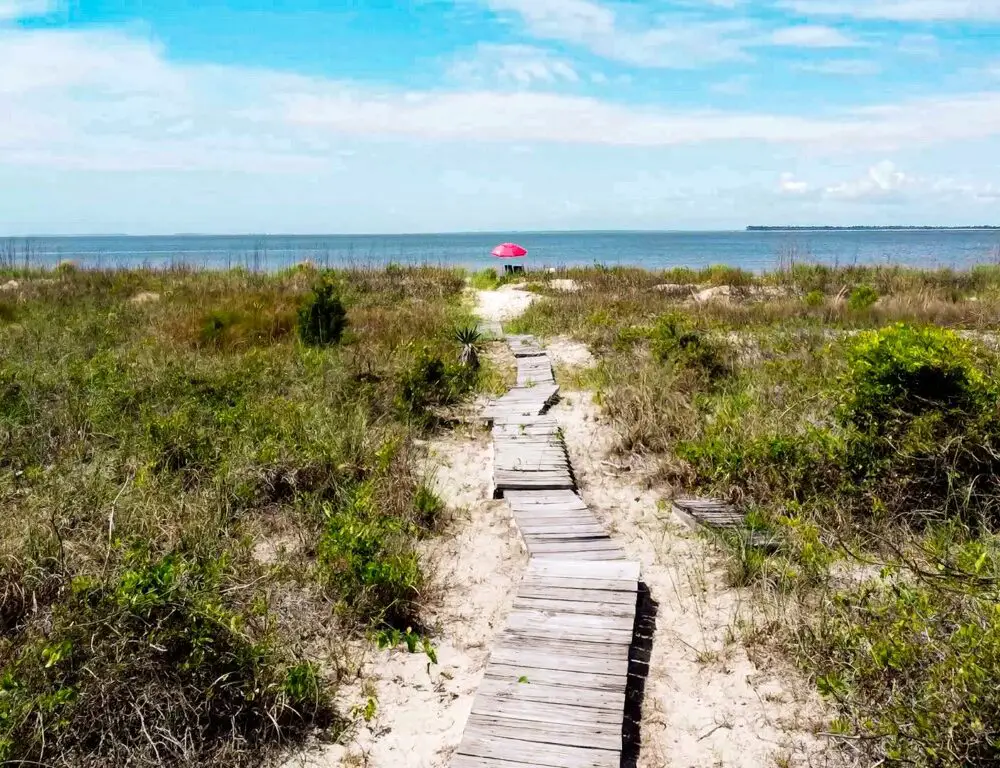
Sullivan’s Island has a new member to its family of nature trails called Sullivan’s Island Nature Trail. This wonderful addition to Sullivan’s Island is characterized by 650 feet of boardwalk and foot nature trail. The boardwalks were carefully designed by an environmental consultant and landscape specialist who ensured that they were angular paths that reflected island features e.g. the light house that is shaped like a triangle. Sullivan Island Nature Trail is positioned right off the Atlantic Street on Sullivan Island next to station 16.

It also has exemplary observation benches and decks that offer views of the harbor, vegetated dunes and forested wetlands that can only be termed as secluded and peaceful. The new nature trail offers visitors the best butterflying and birding experience in town.

This magnificent nature trail runs across the towns protected land and joins the beachfront via the station 16 beach access route. Sullivan Island Nature Trail was made a reality through the grant funds obtained from the Urban Greenbelt Grant Project in addition to the town money.

Leaders from the city termed Sullivan Island Nature Trail as a pilot project as many others are yet to come following its success. This new nature trail is regarded as a convenient means to stay between the beach and the street unlike the traditional practice of using them to gain access from the street to the beach.

Sullivan Island Nature Trail will provide people with a rare opportunity of getting to know species of plant life, animal life and bird life as well that thrive in the beautiful space. The total acreage of the protected land is approximately 90 acres. This provides ample natural space to explore and get some relaxing time from the hustle and bustle of the city.

This large parcel of land has the beautiful Atlantic Ocean running parallel to it, this will offer a breath taking view and a cool breeze as individuals enjoy their nature trail. It has parking space available at the park entrance and within the neighborhood for those with vehicles.

Operation, Opening Times & Details

The Sullivan’s Island Nature Trail is open to visitors from dawn to dusk every day of the week. Sullivan’s Island has always connected its citizens and tourists with nature. However, the new Sullivan’s Island Nature trail completely redefines that connection as seen above. Visit the new trail today for an unforgettable experience.

Hero image by Henryk Sadura

Filed Under: Outdoors

The Most Fun State Parks In South Carolina

Posted on: September 7, 2016

South Carolina is a beautiful state known for its shoreline of subtropical beaches and the Marseille Sea Islands. For those proud residents or for those visiting, the state has some beautiful state parks to offer as vacation spots, nature scenes, and much more! Here is a list of the state parks in South Carolina you should try to visit:

1. Lake Greenwood State Park

Known locally as the host site for the South Carolina Festival of Flowers Triathlon that is held each June. This park provides opportunities for excellent, year-round South Carolina bass fishing, boating, shoreline trails, and campsites.

2. Huntington Beach State Park

Gorgeous and known for its wide open, clean Grand Strand beach, acting as one of the most recognizable landmarks in South Carolina. Take time to bask in a sea-breeze camping experience, enjoy the finest surf fishing that South Carolina herself has to
offer.

3. Edisto Beach State Park

Full of Native American history, the Edisto Beach is located on Edisto Island — one of the four-oceanfront state parks available in South Carolina. It features scenic trails for hiking and biking, allowing for a relaxing and eye-catching tour around the park. It also has an environmental education center that exhibits some of the natural historical highlights of Edisto Island and the surrounding ACE Basin.

4.Paris Mountain State Park

This Park dates back as far as the 1920’s during the Great Depression and was built by the Civilian Conservation Corps (CCC). It offers the top rated camping sites: 13 of them offer tent pads, and five trailside campsites surrounding the North Lake Trail Loop. If you’re planning to camp, this is your place.

5. Sesquicentennial State Park

This Park is known as “Sesqui” in the hearts of locals. It’s a spacious getaway that is immersed in 1,400 acres of pines, trails, and campsites. It also provides great spots for family reunions, parties, and more. The park permits kayak and canoe rentals, a 6-mile long bike loop for day-use recreation only, and vast fishing opportunities.

6. Caesar’s Head State Park

If you are looking for a view, this is the place to stop. It extends upon the dramatic Blue Ridge Escarpment, giving it an easily accessible overlooking view that extends into North Carolina and out to Georgia. It provides dozens of trails, with one leading to a 420-foot waterfall called Raven Cliff Falls.

7. Hickory Knob State Resort Park

Talk about your getaway. This is a serene, remote location that provides a peaceful atmosphere, full of recreational opportunities: an 18-hole championship golf course, skeet shooting, boat ramp, meeting facilities, and an archery range.

8. Croft State Park

Croft State Park from MoreView Media on Vimeo.

Are you a horse lover? This is the horseback riding go-to. Once an army-training base, it now covers 7,000 acres of wooden terrain, offering 12 miles of biking and hiking trails, picnic areas, a playground, and the ability to fish and boat in one of the two lakes. Again, if you love horseback riding, Croft is known for its equestrian
facilities.

9. Cheraw State Park

Forget your traditional recreational park activities. This park moves up an entire level, providing an 18-hole championship Cheraw State Park Golf Course that winds its way through the natural habitat of the state park. You can also explore the cypress wetlands by kayak and canoes. There is a boardwalk that runs along the lake, in which you can fish, boat, or enjoy of Mother Nature’s creations.

10. Lee State Park

Lee State Park is one of the several CCC parks in the state of South Carolina. It is an excellent spot for kayaking and canoeing, as you can embark through the park’s hardwood forest floodplain. You can also enjoy fishing from along the banks of the river and children may fish for catfish in the artesian pond within the park.

11. Colleton State Park

If you are a paddler, then this is your paradise. The park sits only a short drive from I-95 and then it connects to Givhans-Ferry State Park though blackwater. It allows easy access to Edisto River, one of what is said to be the longest free flowing, Blackwater rivers in the entire country. It remains the headquarters for Edisto River canoe and kayak trial.

12. Andrew Jackson State Park

Full of history, this park combines art, the past, community activities into a setting that has made this one of the most popular State Park Services in South
Carolina. You may watch living history programs, visit the Andrew Jackson museum — details his boyhood — and see an 18th-century replica schoolhouse, campground, fishing lake, and various nature trails.

Hero by Gene Bautista.

Filed Under: Outdoors

« Previous Page
Next Page »

Footer

  • Home
  • Things To Do
  • About
  • Where To Stay
  • Articles
  • Areas & Hot Spots
  • Grand Strand
  • Contact
  • About
  • Charleston Area
  • Southern Coast
  • Contact

Copyright © 2026 • TravelSCBeaches.com • All Rights Reserved